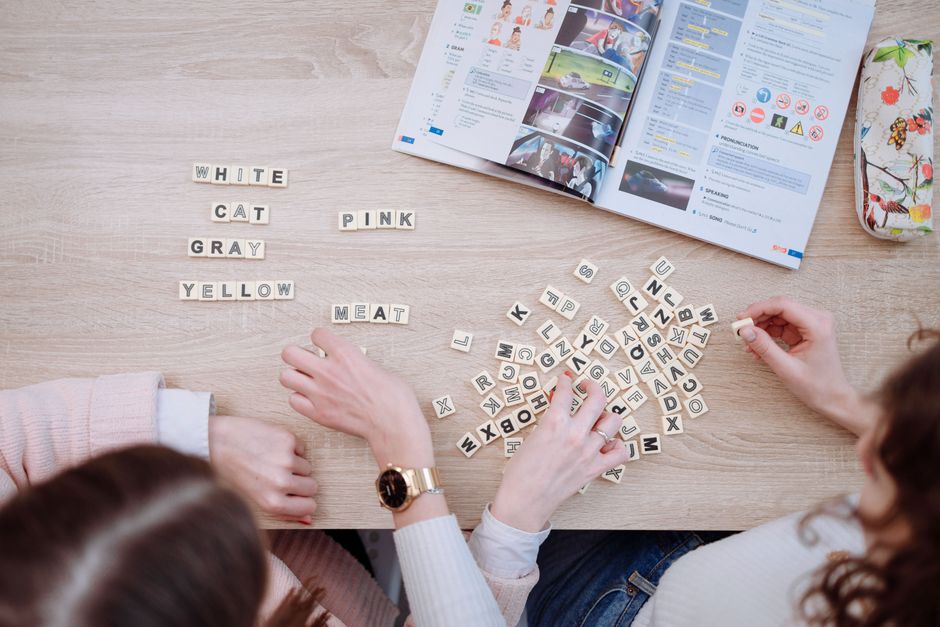
Finding a way to keep a 7-year-old entertained during a long car ride or a rainy afternoon without reaching for a tablet can feel like an impossible task. We’ve all been there, scrolling through endless apps, wondering if there is a way to engage their brains that doesn’t involve a glowing screen. The good news is that puzzle books are one of the most effective tools for this exact scenario. They offer a quiet, focused activity that feels more like a game than a school assignment.
Between the ages of 6 and 10, kids are in a fascinating developmental window. They are moving away from basic recognition and starting to grasp logic, pattern recognition, and complex problem-solving. Choosing the right book can help sharpen these skills while building the stamina needed for more difficult schoolwork. In this guide, I’ll walk you through some of my favorite types of puzzle books that are actually fun for kids and helpful for their growth.
Why puzzle books are a secret weapon for learning
When we talk about educational benefits, it isn’t just about getting better at math or spelling. Puzzles help develop executive functions, which are the mental processes that allow us to plan, focus attention, and juggle multiple tasks. As kids work through a difficult Sudoku or a word search, they are practicing patience and persistence.
These books also offer a unique way to bridge the gap between indoor and outdoor play. While we love a good backyard adventure, there are times when a calm, seated activity is necessary. Puzzles provide that mental stimulation when you’re stuck in a waiting room or a plane seat. Plus, unlike many digital games, a physical book doesn’t require a battery or a Wi-Fi connection.
Cognitive milestones to watch for
During this age range, kids are developing several key skills that puzzles can support:
- Logical Reasoning: Understanding cause and effect through pattern completion.
- Vocabulary Expansion: Discovering new words through crosswords and word scrambles.
- Spatial Awareness: Navigating mazes and geometric puzzles.
- Fine Motor Skills: The physical act of circling, underlining, and writing.
Top recommendations for 6 to 7 year olds
At this stage, kids are often just beginning to read more fluently. You want books that aren’t too text-heavy but still offer a sense of accomplishment. If you are looking for something for a younger sibling, you might look for books that are best for toddlers, but for this 6-7 age group, we want slightly more complexity.
Mazes are a fantastic starting point here. They help with hand-eye coordination and following a path. Look for “Seek and Find” books as well. These are essentially visual puzzles that encourage intense focus and observation. They are great for building the “stamina” of attention that kids need for classroom learning.
< p>Another great option is simple word searches. At this age, they can find familiar words like animals, colors, or planets. It feels like a treasure hunt on paper, making the learning process feel very low-pressure.
Leveling up: Puzzle books for 8 to 10 year olds
Once a child hits 8 or 9, they are often ready for more “grown-up” feeling challenges. This is where you can introduce logic-based puzzles that require a bit more strategy. If they can handle a simple Sudoku, they will likely enjoy the challenge of a more complex grid.
Logic Grids and Sudoku
Logic grids are incredible for teaching deductive reasoning. These puzzles present a series of clues (e.g., “The person in the red shirt does not like apples”) and ask the child to fill out a grid to find the answer. It’s basically a mini-detective game. Sudoku is also a stellar choice because it introduces mathematical thinking without requiring actual arithmetic. It’s all about placement and number sequences.
Word Scrambles and Cryptograms
For kids who love language, cryptograms—where letters are replaced by symbols or other letters—are incredibly engaging. They feel like cracking a secret code. This encourages them to look for patterns and common letter combinations, which is a huge boost for their literacy skills. Word scrambles are also a budget friendly way to keep them busy while subtly teaching spelling.
How to choose the right book for your child
Not all puzzle books are created equal. To avoid the frustration of a book that is too hard (which leads to immediate abandonment) or too easy (which leads to boredom), keep these tips ins mind.
- Check the difficulty progression: Some books start easy and get harder. This is ideal because it builds confidence.
- Look at the theme: A child who loves dinosaurs will be much more likely to finish a dinosaur-themed puzzle book than a generic one.
- Consider the size: For travel, a small, paperback book is much easier to manage than a large, heavy hardcover.
Safety is also a small but necessary consideration. While books are generally very safe, always ensure that any accompanying tools, like small erasers or specialized pencils, are age-appropriate and not a choking hazard for much younger siblings who might be nearby.
Practical tips for parents
Don’t feel like you have to sit there and solve every puzzle with them. The goal is independence. However, if they get stuck on a particularly tricky logic puzzle, use it as a teaching moment. Instead of giving them the answer, ask questions like, “What do we know for sure about this clue?” or “What happens if we try this path in the maze?”
You can also make it a family affair. On a rainy Sunday, grab a large puzzle book and see who can find the most hidden objects or solve the most word scrambles. Making it a social, low-stress activity prevents it from feeling like “extra homework.”
Final thoughts on building a puzzle habit
Building a love for puzzles is about celebrating the “aha!” moment. When your child finally cracks that code or finds the path through the maze, that burst of dopamine is what keeps them coming back. It builds a foundation of resilience and a genuine curiosity about how things work.
Whether you are looking for a budget friendly way to pass the time or a meaningful way to support their school learning, a well-chosen puzzle book is a wonderful investment. Start small, follow their interests, and enjoy watching their confidence grow with every solved page.
Ready to find your next adventure? Check out your local library or bookstore this weekend and see if you can find a theme that sparks your child’s curiosity!